A police investigation sparked by the seizure of a Lamborghini ultimately exposed two significant fraud schemes orchestrated by a man from Bradford.
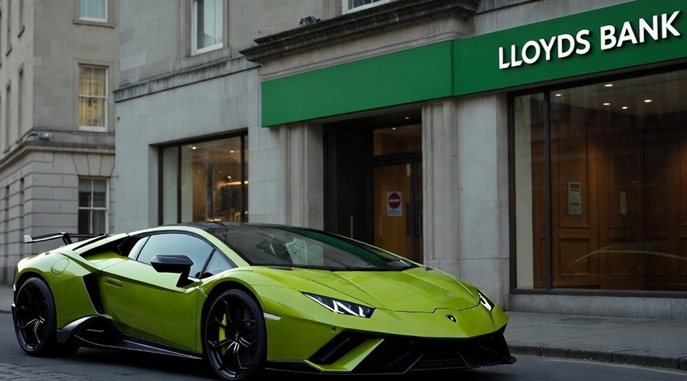
At Bradford Crown Court, the case cantered on Shakeel Hussain, who in July 2022 approached officers asserting ownership of a Lamborghini Urus.
Unresolved inconsistencies in his story led authorities to dig deeper.
Investigators traced the vehicle’s origins and learned it had been acquired in October 2021 from a dealership in Keighley for £160,000.
The payment involved trading in a Porsche 911 Turbo valued at £100,000 and a Mercedes-Benz C63 convertible worth £63,000, which featured a private registration plate.
The buyer was listed as ARC Ltd, a company linked to Hussain.
Prosecutor Anthony Moore outlined how officers methodically reconstructed the chain of transactions involving the vehicles.
They uncovered that Hussain, now 40 and residing on Tyersal Avenue in Tyersal, Bradford, had established two bank accounts on June 10, 2020, tied to a fictitious entity called LD Beauty.
These accounts used stolen identity details from a genuine individual.
Through this fabricated business, Hussain secured a £50,000 Bounce Back Loan under the government’s Covid support program.
Additionally, the scheme fraudulently obtained a £30,946.61 tax rebate from HMRC, this time exploiting the identity of yet another real person.
The £50,000 loan funds arrived in a Lloyds account opened the day before, on June 10. Shortly afterward, between July 9 and 12, £49,250 was moved to a Barclays account held in Hussain’s name.
The HMRC rebate landed in the LD Beauty Lloyds account on July 23, and once cleared on July 27, £30,745 was immediately transferred out that same day.
In total, approximately £79,995 flowed into Hussain’s personal Barclays account from these illicit sources.
Further inquiries revealed Hussain’s spending patterns aligned closely with the arrival of the fraud proceeds.
On March 20, 2020, he purchased a Porsche for £50,402, with payment drawn from the same Barclays account that later received the Bounce Back funds.
Similarly, the £63,000 Mercedes C63 convertible, acquired in July 2020, was paid for in instalments over three days, sourced from that Barclays account and timed within 48 hours of receiving the fraudulent loan money.
When the Mercedes was collected on July 16, four Asian men arrived in a Lamborghini Urus and added £5,000 cash for the private plate.
The Lamborghini itself had been purchased earlier, on March 3, 2021, for £153,000 from the Keighley dealership.
Payment consisted of a £93,000 bank transfer, £5,000 cash, and the part-exchanged Mercedes C63, originally bought with fraud proceeds, along with the Porsche 911 Turbo.
Documentation indicated the sale was to ARC Ltd, with Hussain listed at an address on Nazim Buildings in Leeds.
Records from Companies House confirmed Hussain had served as director of several now-dissolved companies between 2016 and 2023, but no active registration existed for ARC Ltd.
Moore emphasized to the court that the Lamborghini’s seizure and the resulting ownership questions were pivotal, without them, Hussain’s fraudulent activities would likely have remained undetected.
In a voluntary police interview during July 2023, Hussain denied the charges.
He maintained ownership of the Lamborghini, valuing it at £220,000, and claimed the vehicle’s impoundment had caused him to lose his businesses, insisting much of his wealth was tied to the car.
Hussain ultimately entered a guilty plea on the second day of his trial to a charge of acquiring criminal property between July 9 and July 28, 2020.
In mitigation, barrister Shannon Woodley urged a suspended sentence, citing the significant time passed since the offenses, Hussain’s classification as low risk for serious harm, and his reputation as “a very well-regarded man.”Recorder Mark McKone sentenced Hussain to 19 months’ imprisonment, suspended for two years.
The judge noted Hussain’s limited prior convictions (for unrelated matters), his lack of reoffending in the five years following the frauds, and his potential for rehabilitation.
He imposed 200 hours of unpaid work and 15 days of rehabilitation activity requirements.